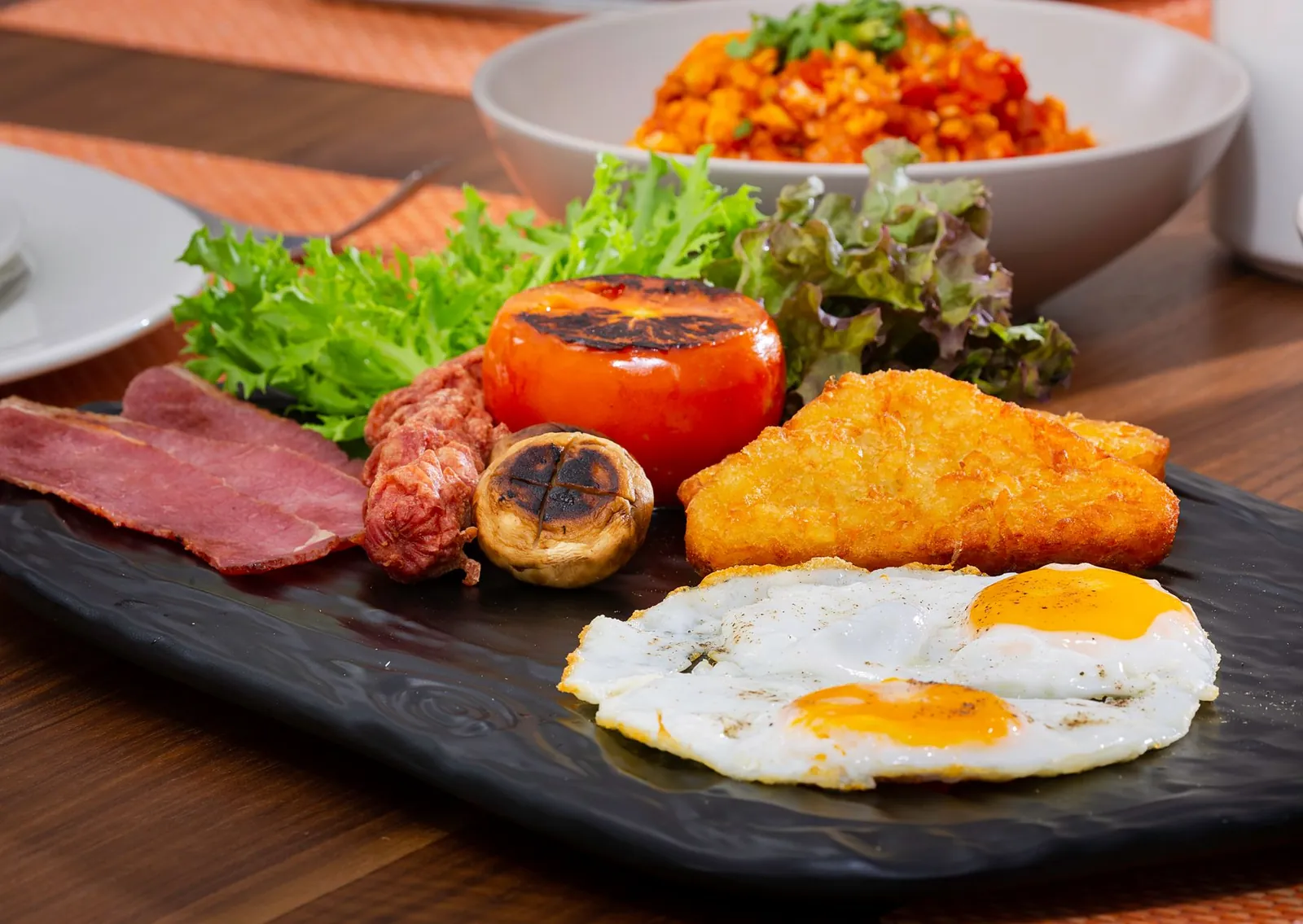
Protein is the one part of the diet where most active men quietly fall short, and where fixing it changes how they look and feel more than any other single tweak. It is the raw material your body uses to repair muscle after you use it, to keep your hair and skin and nails intact, and to hold on to lean tissue as you age. Carbohydrate and fat can both be stored and drawn on later; protein largely can't, which is why it has to arrive across the day rather than in one big hit. The good news is that hitting a sensible amount takes no powders, no apps and no weighing scales — just a habit of putting a protein at the centre of each meal instead of treating it as a garnish.
How much is enough?
General nutrition guidance for a reasonably active adult lands somewhere around 1.2 to 1.6 grams of protein per kilogram of body weight a day. For an eighty-kilo man that's roughly a hundred to a hundred and thirty grams — more than a slice of ham on toast, less than the tub of powder marketing implies you need. You don't have to memorise numbers, though. A far easier rule of thumb: aim for a palm-sized portion of a protein-rich food at every meal, and one at a snack if you're hungry. Do that three or four times a day and you'll be in the right neighbourhood without ever counting.
Spread it out
Where people slip is the shape of the day, not the total. A typical pattern is a near-proteinless breakfast (toast, cereal, coffee), a light lunch, and then most of the day's protein dumped into a large dinner. Your body can only put so much to good use at once, so front-loading breakfast and lunch works better than a single evening feast. It also keeps you fuller through the afternoon, which is when the vending machine starts calling. Getting twenty to thirty grams into breakfast is often the highest-leverage change a man can make to his whole diet.
Cheap, everyday sources
You do not need anything exotic. The following are all ordinary, affordable and easy to keep in:
- Eggs — around six grams each, endlessly flexible, and fine to eat daily for most people.
- Chicken and turkey — lean, cheap by the kilo, and freeze well cooked or raw.
- Tinned fish — tuna, sardines, mackerel: no cooking, long shelf life, a genuine bargain.
- Greek yoghurt and quark — high protein, works sweet or savoury, great for breakfast.
- Beans, lentils and chickpeas — dirt cheap dried or tinned, and they bring fibre too.
- Milk and cottage cheese — an easy way to top up between meals.
Meat is a convenient source but not a mandatory one. A plate built on lentils, beans, eggs and yoghurt covers protein perfectly well, usually for less money.
The question at every meal isn't "is this healthy?" It's "where's the protein?" Answer that first and the plate tends to sort itself out.
A sample day without trying hard
Breakfast: three scrambled eggs on toast, or Greek yoghurt with fruit and a spoon of seeds. Lunch: a tin of tuna or last night's chicken over a big salad, plus some bread or rice. Afternoon: a glass of milk or a handful of yoghurt if you're peckish. Dinner: a palm or two of fish, chicken or a bean stew, half a plate of vegetables, a fist of carbs. That's an unremarkable day of eating — nothing fancy, nothing banned — and it comfortably clears the target for most men.
Three fixes that do most of the work
Add eggs or yoghurt to a currently carb-only breakfast. Cook extra protein at dinner and eat the leftovers at lunch. Keep tinned fish and a tub of yoghurt in stock so there's always a fast, cheap option when you can't be bothered.
What about powders?
Protein powder is food in a convenient form, nothing more magical than that. If you struggle to eat enough — you're busy, you're not very hungry in the mornings, you travel a lot — a scoop in milk is a reasonable shortcut. But it is a shortcut, not a requirement, and it shouldn't crowd out real meals that also bring fibre, vitamins and the simple satisfaction of chewing. Spend your money on eggs, fish and beans first, and treat powder as the backup it is.
None of this needs to be strict. Eat enough protein most days, spread across most meals, from foods you actually like, and you've done the part that matters. The precision the internet argues about barely moves the needle next to that one habit. Put the protein first and let the rest of the plate follow.